
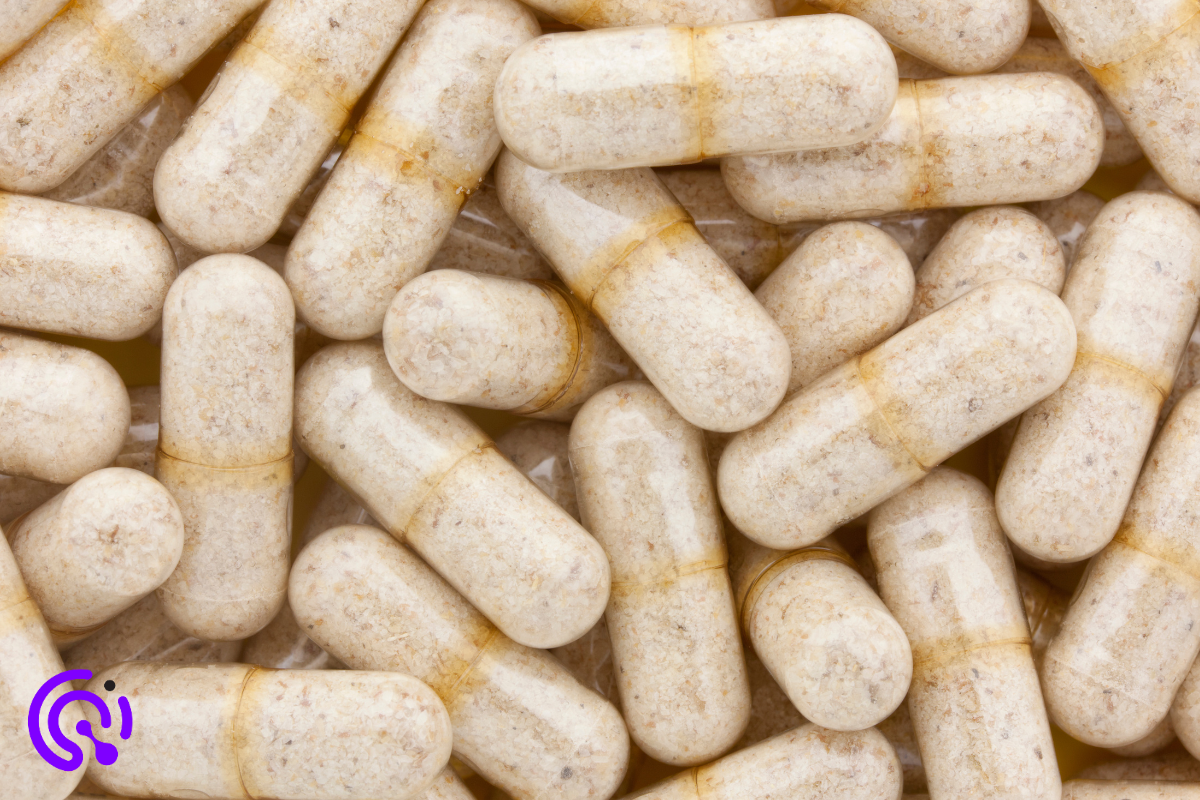
Can You Put Enough Fiber in a Capsule? The Dosage Challenge
When developing a fiber supplement, one of the first questions brands may ask is: Can we fit enough fiber into a capsule to make it worthwhile?
The answer depends on the type of fiber, the intended dosage and the capsule’s capacity.
Unlike many vitamins and botanical extracts, dietary fiber is typically used in gram-level quantities. Capsules, however, have limited fill capacity, which can make delivering a meaningful amount of fiber challenging.
For supplement brands planning to launch a fiber product, choosing the right format is just as important as selecting the right ingredient.
Why Is Fiber Difficult to Put in a Capsule?
The biggest challenge in fiber supplement formulation is the amount of space required to accommodate the intended dosage.
Many fiber ingredients are used in grams per serving, while capsules have a relatively small internal volume. Depending on the dosage, consumers may need to take several capsules to achieve the intended fiber intake.
Capsule capacity also depends on several factors:
- Capsule size: Larger capsules can accommodate more powder by volume.
- Bulk density: Different fiber ingredients occupy different amounts of space at the same weight.
- Particle size: Powder characteristics can affect how efficiently an ingredient fills a capsule.
- Formulation composition: Additional active ingredients and excipients also take up space.
This means that even if a fiber ingredient has a suitable nutritional profile, it may not be practical for capsule manufacturing at the desired dosage.
Not All Fiber Ingredients Are the Same
The type of fiber used in a supplement can significantly affect its formulation and suitability for different product formats.
Some commonly used dietary fiber ingredients include:
| Fiber ingredient | Key formulation consideration |
|---|---|
| Psyllium husk | High water absorption and thickening properties |
| Inulin | Soluble fiber with potential prebiotic applications |
| Resistant dextrin | Generally good solubility and formulation flexibility |
| Partially hydrolysed guar gum | Soluble fiber with relatively low viscosity |
| Acacia fiber | Soluble fiber that can be used in various powder formulations |
Each ingredient has different physical characteristics, including bulk density, solubility, water absorption, viscosity and flowability.
For example, a fiber that dissolves easily in water may be suitable for a powdered drink, while a fiber with strong water-absorbing properties may present different processing and consumption considerations.
Choosing a fiber ingredient isn’t just about its nutritional benefits. It also needs to be compatible with the intended dosage, product format and manufacturing process.
When Does Fiber Powder Make More Sense Than Capsules?
For products that require a higher fiber dosage, powder is often a more practical option than capsules.
A fiber powder supplement can deliver several grams of fiber in a single serving without requiring consumers to swallow multiple capsules.
Depending on the product concept, brands can consider several formats:
Powder sachets
Convenient, pre-measured servings that can be mixed with water or other beverages. Suitable for brands looking for portion control and portability.
Powder tubs
Suitable for products with larger serving sizes or multiple servings per container, offering flexibility for daily use.
Fiber drinks
Fiber can be incorporated into powdered beverage formulations. However, solubility, viscosity, taste and mouthfeel need to be considered to create a pleasant drinking experience.
The most suitable format depends on the intended fiber dosage, target consumer and overall product positioning.
Can Fiber Still Be Formulated in Capsules?
Yes. Fiber supplements can be manufactured in capsules when the intended dosage and ingredient properties are suitable.
Capsules may be a good option when:
- The required fiber dosage is relatively low.
- The selected fiber has suitable bulk density and flow properties.
- The number of capsules per serving is practical.
- The formulation fits within the available capsule capacity.
However, if a product requires several grams of fiber per serving, the number of capsules needed may become inconvenient for consumers.
This is why capsule size, fill capacity and serving size should be evaluated during the early stages of supplement development, rather than after the formulation has been finalised.
Capsule vs Powder: Which Format Is Better?
| Consideration | Capsules | Powder |
|---|---|---|
| Higher fiber dosage | More challenging | More flexible |
| Ease of consumption | No mixing required | Requires mixing |
| Portability | Convenient | Convenient in sachets |
| Flavour options | Limited relevance | Can be flavoured |
| Large serving size | May require multiple capsules | Generally more practical |
| Formulation flexibility | Limited by capsule capacity | Greater dosage flexibility |
Neither format is inherently better. The right choice depends on how much fiber the product needs to deliver and what experience the brand wants to offer its consumers.
5 Things to Consider Before Developing a Fiber Supplement
Before approaching an OEM supplement manufacturer, brands should consider five key factors:
- Target fiber dosage: Determine how much fiber the product is intended to provide per serving.
- Fiber ingredient: Select an ingredient based on its functional properties, nutritional profile and suitability for the formula.
- Product format: Decide whether capsules, powder sachets, stick packs or tubs best suit the intended dosage and target consumer.
- Taste and texture: For powdered products and beverages, consider solubility, viscosity, mouthfeel and flavour.
- Manufacturing feasibility: Evaluate powder flow, capsule capacity, processing requirements and packaging compatibility to ensure the product can be manufactured consistently.
Considering these factors together can help avoid unnecessary reformulation and ensure the final product is both practical to manufacture and convenient for consumers.
The Bottom Line
Can you put enough fiber in a capsule? Yes, but it depends on the fiber ingredient, dosage and capsule capacity.
For lower-dose formulations, capsules may be a suitable option. For products requiring higher amounts of fiber, powder sachets, stick packs, tubs or drinks may offer greater flexibility and convenience.
At LIQ Formulations, we believe that successful supplement development starts with the product objective, not just the ingredient. Choosing the right dosage, formulation and product format from the beginning can help brands develop products that are practical to manufacture and suited to their target consumers.
The goal isn’t simply to fit fiber into a capsule. It’s to choose a format that delivers the intended formulation effectively.